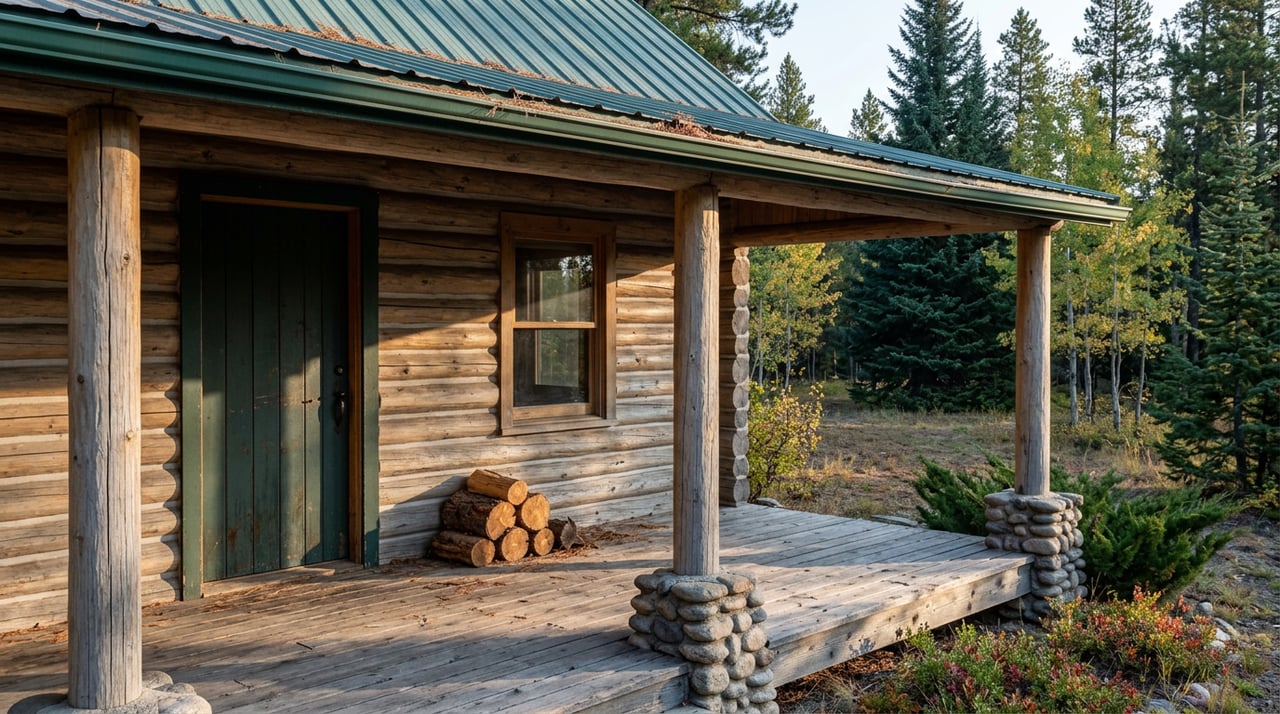
A cabin three blocks off Main Street and a cabin four miles up the valley toward Wheeler Peak can look nearly identical on a listing sheet. Same log siding, same view of the ski area, same asking price range. What almost never shows up in the listing description is which side of an invisible boundary the property sits on, and that boundary decides whether the seller is legally required to have a septic system inspected before the deal can close.
Red River is small enough that most buyers assume the whole town runs on one set of rules. It doesn't. The Town of Red River operates its own water and sewer system, and everything inside that service area plays by a different rulebook than everything outside it. For a market built almost entirely on cabins, condos, and vacation rentals, that line is worth understanding before you write an offer or sign a listing agreement.
Where the Town Actually Ends
Red River was incorporated in 1971, and the town government that grew out of that incorporation runs its own municipal services, including water and sewer. The wastewater side of that system, the Advanced Waste Water Treatment Plant on Highway 38 near mile marker 10, has been in continuous operation since 1983 and currently services about 600 customers, a number that swells in practical terms during the busy season when as many as 8,000 visitors a day are using the town's plumbing.
Six hundred sewer connections against a full-time population of 542 residents as of the 2020 census tells you something important: the in-town sewer system was built to serve essentially every full-time home, plus a meaningful share of the condos and short-term rentals clustered near Main Street, places like the ski-in buildings and downtown condo stacks that make up much of Red River's vacation rental inventory. What it does not cover is the sprawl of cabins and cabin lots that carry a Red River mailing address but sit outside the actual town limits, up the valley toward the ski area, along the county road frontage, or in outlying subdivisions like Valley of the Pines and Hidden Valley. Those properties rely on private septic systems, and that single fact changes the entire pre-closing checklist.
What Crossing That Line Triggers
New Mexico law treats septic systems outside a municipality very differently than the plumbing inside one. Once a property sits beyond the town's sewer service area, state regulations require the septic system to be inspected before ownership can transfer to a new buyer. This isn't a courtesy inspection a buyer can waive along with the rest of the general home inspection. It's a conveyance requirement tied to the property itself.
If that inspection turns up a failing system, the repair becomes a negotiation between buyer and seller, but the clock attached to it doesn't care whether the deal closes. Whoever holds legal title 180 days after a failed inspection is responsible for completing the repair, full stop, whether the sale goes through or falls apart. Miss that window and the New Mexico Environment Department can red-tag the property, which means it becomes legally uninhabitable until the system is fixed. A seller who assumes a collapsed deal also means a paused problem is wrong. The state doesn't pause with them.
For a market like Red River's, where a meaningful share of inventory is second homes and short-term rentals that sit empty for stretches of the year, this creates a specific kind of risk. An owner who hasn't lived in the cabin full time may have no idea their leach field has been failing quietly for a season or two, because nobody was there daily to notice slow drains or soggy ground near the field. The first anyone hears about it can be the week a buyer's inspector shows up.
The Lot-Size Trap Built Into Red River's Oldest Blocks
There's a second wrinkle that makes this more than a generic septic warning, and it has to do with how Red River was originally laid out. New Mexico's liquid waste regulations set three-quarters of an acre as the minimum lot size for installing a new conventional septic system. Red River's town core, however, traces back to a late-19th-century mining settlement, and a lot of the cabins built in that original footprint, along with plenty from the 1950s and 1960s building boom that followed, sit on parcels smaller than that threshold.
Those smaller lots aren't automatically disqualified. If a septic system on an undersized lot was properly permitted when it was installed and it currently passes inspection, the system is grandfathered in and the owner is fine. But grandfathered is not the same as flexible. If that system fails, the replacement options narrow considerably, because a straightforward like-for-like conventional system may not be legal to install on a lot that size under current rules. That's a very different conversation with a lender or an inspector than the one a buyer has on a full-acre parcel out toward Hidden Valley, where a failed system usually just means a repair estimate and a negotiation.
One longtime Taos County real estate broker who has handled decades of local septic transactions has described inspecting everything from failed cesspools to old oil field water barrels pressed into service as tanks, a reminder that "grandfathered and functioning" and "grandfathered and quietly failing" can look identical from the surface.
What the Average Price Doesn't Tell You
As of the most recent update in mid-2026, the average home value across Red River sits around $410,000, down slightly over the prior year. That single number gets treated as the market, but it flattens two very different transactions into one line. A condo three blocks from the lift, tied into municipal sewer, closes like a straightforward in-town sale. A cabin with the same square footage a few miles up the valley carries a conveyance-triggered inspection, a potential 180-day repair clock, and possibly a lot-size ceiling on what repair even looks like. None of that shows up in a price average, and none of it shows up on a map unless someone tells you where the town's service boundary actually runs.
What This Means If You're Buying or Selling Here Now
If you're selling a cabin outside the town's sewer service area, the smart move is scheduling a septic inspection before you list, not after you're under contract. Finding out early whether your system passes, and whether your lot size gives you full replacement options or only grandfathered repair options, lets you price the home honestly and negotiate from a position of knowledge instead of surprise.
If you're buying, the first question to ask isn't the age of the roof or the finish level of the kitchen. It's whether the property is inside the Town of Red River's sewer service area or outside it, and if it's outside, when the septic system was last inspected and what the lot size actually is relative to the three-quarter-acre threshold. That single answer determines what your closing timeline and your worst-case repair scenario actually look like.
Quick Answers Before You Sign Anything
Do any properties inside Red River's town limits ever need a septic inspection? No. If a property is connected to the town's municipal sewer system, state septic regulations, including the mandatory pre-conveyance inspection, don't apply to it.
What happens if my septic system fails inspection but my lot is under three-quarters of an acre? An existing permitted system that's failing can still be repaired, but a full new conventional system generally can't be installed on an undersized lot under current rules. This is worth discussing with a licensed septic professional before you assume repair costs will be routine.
Who is actually on the hook if a septic system fails and the sale doesn't close? The legal owner of record 180 days after the failed inspection is responsible for the repair, regardless of whether a buyer is still in the picture. The obligation follows the title, not the transaction.
Whether you're weighing a listing up the valley or a condo three blocks from the lift, the details that actually shape your closing rarely show up in the photos. If you're thinking about buying or selling in Red River and want a straight read on what a specific property's location means for your timeline, Sweet Escape Realty is a good place to start that conversation. Schedule a free consultation and we'll walk through it together.