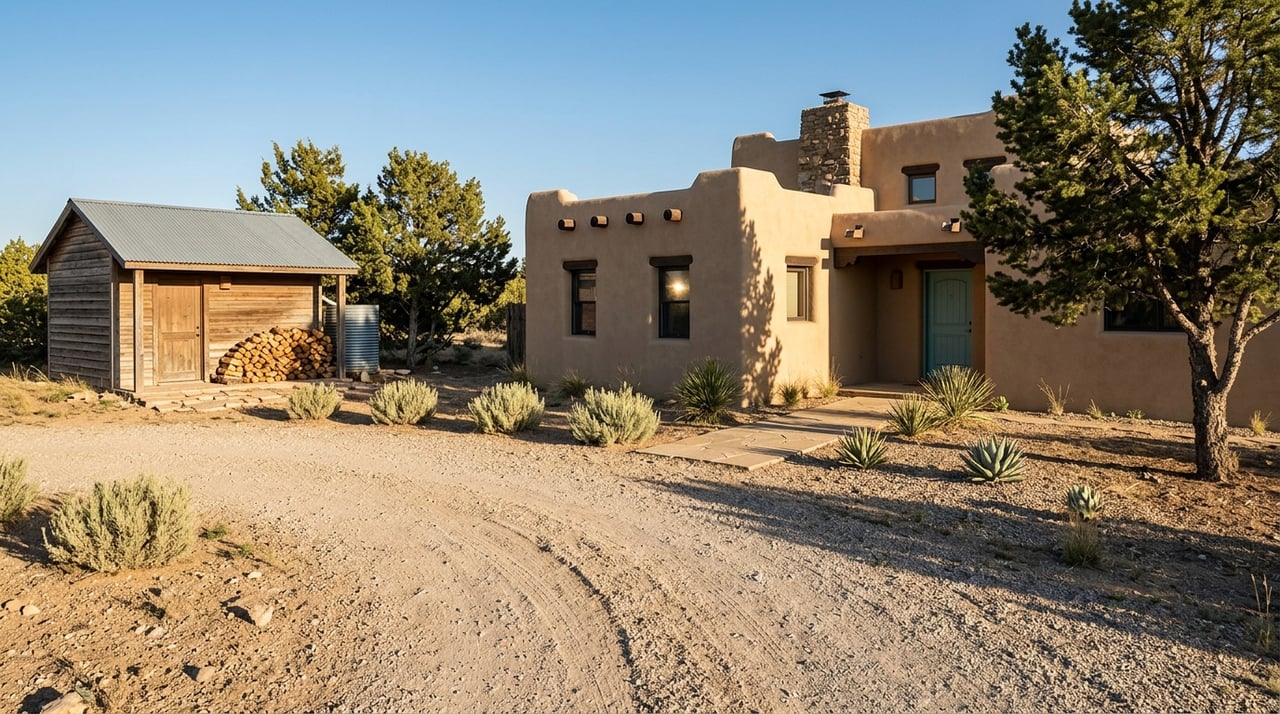
If you are selling a rural home near Chama, your buyer may be hundreds of miles away when they first decide your property is worth a closer look. In a market with limited inventory and few monthly sales, that first online impression matters even more. The good news is that with the right pricing, presentation, and prep, you can make your property easier to understand and more appealing to serious out-of-area buyers. Let’s dive in.
Why out-of-area buyers matter near Chama
Rural Chama-area properties often attract people who are not already living nearby. Some are looking for a full-time move, while others are searching for a second home, a recreational basecamp, or a place with more land and privacy.
That makes digital marketing especially important. According to the National Association of Realtors 2024 buyer data, 43% of buyers started their search online, 52% found the home they purchased on the internet, and 89% bought through a real estate agent or broker. For you as a seller, that means your listing page and your broker’s communication can shape whether an out-of-area buyer books a showing or scrolls past.
Understand Chama's thin market
One of the biggest challenges in pricing a rural home near Chama is that the market is thin. As of March 31, 2026, Zillow’s Chama market page showed an average home value of $328,013, 23 active listings, and a median list price of $530,000.
County-level numbers add more context. Redfin’s Rio Arriba County housing data showed a March 2026 median sale price of $340,000, a median 75 days on market, and only 9 sales that month. In a small-data environment like this, one or two unusual transactions can skew the picture quickly.
That is why broad averages should not be your only guide. A rural property near Chama needs to be priced based on its specific features, condition, and utility profile, not just a price-per-square-foot shortcut.
Price for how rural buyers compare homes
Out-of-area buyers usually compare rural homes differently than suburban buyers. They are often looking beyond bedroom count and square footage to figure out how the property will actually function once they arrive.
A strong pricing strategy should account for details like:
- Acreage and usable land
- Road access and approach
- Utility type
- Water source
- Septic status
- Overall condition
- Outbuildings and storage
- Setting for recreation, privacy, and views
That level of detail matters in a county where inventory is limited and sale data can be sample-sensitive. It also helps explain why two homes with similar living area can attract very different levels of interest.
There is still room for well-positioned listings to perform. Redfin reports a 96.4% sale-to-list ratio in Rio Arriba County, with 11.1% of homes selling above list price. That does not mean every property will spark bidding, but it does suggest that realistic pricing and strong presentation can still produce solid results.
Build a listing for remote buyers
When buyers live out of town, your listing has to answer more questions before they ever call. It is not enough to show a few attractive photos and basic room counts.
Among buyers who used the internet, NAR found that photos were very useful to 66%, detailed property information to 65%, floor plans to 47%, virtual tours to 33%, neighborhood information to 32%, interactive maps to 22%, and videos to 21%. For a rural Chama-area listing, those tools should be treated as essential.
Use photos to explain the property
Photos should do more than make your home look attractive. They should help a buyer understand the whole property, including the home, entry drive, views, outdoor living areas, and any outbuildings.
In a rural setting, orientation matters. Buyers traveling from out of area often want to know how the house sits on the land, where structures are located, and what portions of the parcel appear usable.
Add floor plans and maps
A floor plan helps buyers picture how the home lives day to day. That is especially helpful for second-home shoppers or buyers planning a remote purchase, since they may be deciding whether to travel for an in-person visit.
Maps are just as important in rural areas. They can help clarify access, parcel layout, surrounding context, and proximity to the outdoor destinations that often draw buyers to the Chama area in the first place.
Write details that reduce uncertainty
A rural buyer may hesitate if the listing leaves too many open questions. The more clearly you present practical details, the easier it is for a serious buyer to move forward.
Helpful listing information can include:
- Water source
- Septic type and known records
- Utility setup
- Road access
- Condition of major improvements
- Included outbuildings or work spaces
- General recreational context nearby
Stage the full property, not just the house
Staging is not only for urban or luxury homes. The National Association of Realtors’ staging guidance defines staging as cleaning, decluttering, repairing, depersonalizing, and updating the home so buyers can picture themselves in the space more easily.
For a rural property near Chama, that same principle should apply beyond the interior. Buyers will notice porches, barns, corrals, storage buildings, work areas, and the driveway approach just as much as they notice the living room.
Before photos and showings, focus on the areas buyers are most likely to remember:
- Clear and tidy the entry drive
- Remove unnecessary clutter around outbuildings
- Clean porches and exterior gathering areas
- Organize barns, sheds, or utility spaces
- Handle visible repairs that could raise questions
- Make sure the home feels bright, clean, and easy to imagine using
Get well and septic records ready early
Transaction readiness can make or break a rural sale, especially when your buyer is coordinating travel, inspections, and financing from out of town. If records are incomplete or delayed, the process can slow down fast.
According to the New Mexico Department of Health private well resources, well owners should keep well logs and records, and real estate professionals should be able to explain both the drinking-water source and the sewage-treatment system. The same source notes that many lenders require bacteria, nitrate, and lead testing for private wells, with VA and FHA often following EPA-style requirements when local rules do not apply.
On the septic side, the New Mexico Environment Department property transfer page states that properties with onsite liquid waste systems must be evaluated before transfer, and that the process can take up to 10 days. The agency recommends starting as soon as possible.
If a septic permit cannot be found, the system may be treated as unpermitted and may need registration or permitting. That is one reason it is smart to gather documents before your home hits the market, not after you accept an offer.
Records to gather before listing
Try to assemble as much of this information as possible:
- Well log and related well records
- Septic permit and any transfer evaluation paperwork
- Maintenance history for well or septic systems
- Information on any advanced treatment system or holding tank
- Service provider contacts, if applicable
The New Mexico Environment Department’s onsite wastewater resources also note that advanced treatment systems or holding tanks may involve permit transfer and maintenance or sampling contracts as part of ownership change. If that applies to your property, early preparation can prevent later surprises.
Highlight why the trip is worth it
Out-of-area buyers are not only evaluating your home. They are also deciding whether the setting justifies the drive or flight to see it in person.
This is where the Chama area has real strength. According to Carson National Forest recreation information, the region offers year-round recreation including fishing, hunting, camping, and hiking. The Forest Service also notes that the Rio Chama is about 120 miles long and includes a 31-mile federally protected Wild and Scenic segment with floating, fishing, and wildlife viewing.
Nearby recreation adds even more context. Heron Lake State Park offers boating, fishing, camping, and a 5.5-mile trail along the Rio Chama with a suspension bridge crossing. Chama is also the starting point for the Cumbres & Toltec Scenic Railroad, which runs 64 scenic miles as a National Historic Landmark.
If your property benefits from convenient access to these regional amenities, your marketing should say so clearly and factually. That helps remote buyers picture not just the house, but the routine and landscape that come with it.
Plan showings for long-distance buyers
When a buyer is traveling in, showings often carry more weight. They may be trying to see multiple properties in a short window, and they are counting on the visit to confirm what the online presentation promised.
That makes preparation critical. The property should be easy to access, clean, and ready to show in a way that respects the buyer’s time and helps them understand the land, structures, and systems.
Safety matters too. NAR’s safety guidance recommends steps such as sharing schedules, noting poor cell signal in advance, and avoiding isolated spaces like attics, crawl spaces, or garages where someone could be trapped. In rural areas, clear planning helps create a smoother and more professional showing experience for everyone involved.
What sellers should focus on most
If you want to attract out-of-area buyers to a rural home near Chama, focus on three things first: accurate pricing, complete presentation, and early paperwork prep. Those are the pieces that reduce uncertainty and help a remote buyer move from curiosity to action.
In a thin market, you do not need the most attention from the most people. You need the right buyer to quickly understand your property’s value, condition, and setting. When your listing answers the practical questions and showcases the lifestyle appeal of northern New Mexico, you give that buyer a strong reason to take the next step.
If you are getting ready to sell a rural property in northern New Mexico, Antonio Martinez can help you build a smart plan for pricing, digital presentation, and transaction prep that speaks to both local and out-of-area buyers.
FAQs
How should you price a rural home near Chama for out-of-area buyers?
- You should price it based on more than square footage, with close attention to acreage, access, water source, septic status, condition, outbuildings, and overall setting.
What listing features matter most to remote homebuyers near Chama?
- Photos, detailed property information, floor plans, virtual tours, and maps matter because they help remote buyers understand the home and land before committing to a trip.
What well documents should you have ready when selling a rural New Mexico home?
- You should try to gather the well log, related records, maintenance history, and any information a buyer or lender may need about the property’s drinking-water source.
What septic steps are required when selling a property in New Mexico?
- Properties with onsite liquid waste systems must be evaluated before transfer, and the New Mexico Environment Department says the process can take up to 10 days, so it should be started early.
What local attractions can help market a home near Chama?
- Facts about access to Carson National Forest, the Rio Chama, Heron Lake State Park, and the Cumbres & Toltec Scenic Railroad can help show why the area appeals to out-of-area buyers.