Thinking about buying a home with acreage in Arroyo Hondo or Questa? It can be an exciting move, whether you want more space, privacy, room to keep animals, or land for future plans. It can also come with a different set of questions than a typical in-town purchase, especially around water, access, utilities, and land use. If you know what to verify early, you can shop with more confidence and avoid surprises later. Let’s dive in.
Why Acreage Homes Need Extra Review
Buying acreage in North Taos is not just about the house. In Arroyo Hondo and Questa, the land itself can affect how a property functions, what it costs to maintain, and how easy it is to improve over time.
Taos County’s planning framework places strong emphasis on water resources, acequias, and traditional land stewardship. That matters because two properties with similar square footage can feel very different in value and usability once you look at water service, septic status, legal access, drainage, and any irrigation-related rights.
For you as a buyer, the big takeaway is simple: do not assume that acreage works the same from one parcel to the next. Parcel-specific due diligence is essential.
Water Service in Arroyo Hondo and Questa
Water is one of the first things to confirm when you are buying rural or semi-rural property. Taos County’s water infrastructure is not uniform, and service can vary even within the same community.
The county’s land-use materials note 29 mutual domestic water consumer associations serving about 9,140 residents through 3,119 connections. Arroyo Hondo includes both Lower and Upper Arroyo Hondo mutual domestic water consumer associations, while Questa has a municipal Water/Sewer Department.
That means you should verify the exact source of water for the specific property you are considering. A listing in Arroyo Hondo does not automatically mean the same water setup as another home nearby, and a property in Questa may have different service arrangements depending on the parcel and improvements.
Questions to Ask About Water
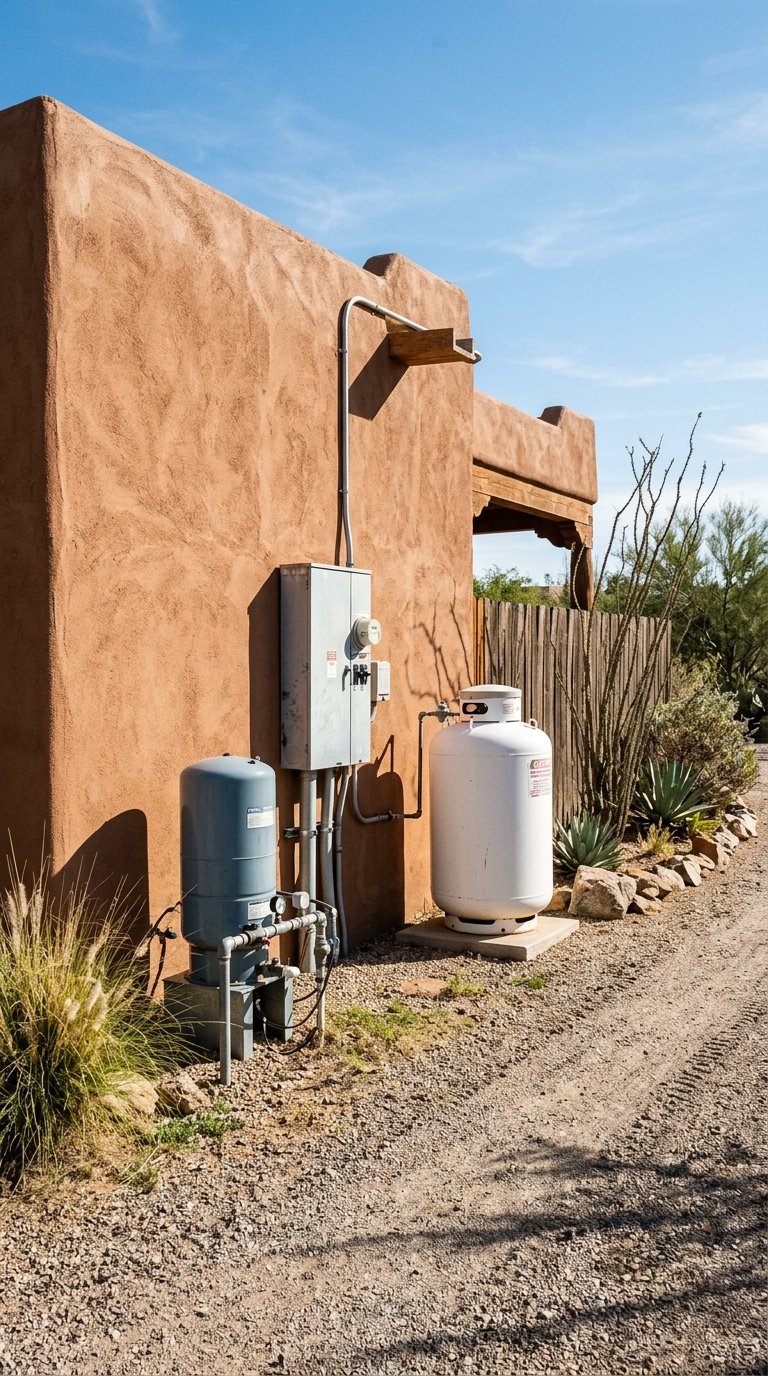
- Is the home connected to a mutual domestic water consumer association, village utility, private well, or catchment system?
- If connected to a provider, is the connection active and documented?
- If there is a well, is there an approved well permit on file?
- If the property uses catchment, are tank details and water-hauler documentation available?
- If irrigation or acequia rights are involved, what exactly conveys with the sale?
Septic, Sewer, and Liquid Waste Rules
For acreage properties, wastewater is just as important as water supply. Before building or major remodeling, Taos County requires either an approved well permit or district approval for water connection, plus either a New Mexico Environment Department liquid-waste permit or sewer approval.
In practical terms, you want to know whether the property is already served by sewer, relies on an on-site septic system, or may need additional review for future improvements. This can affect both your short-term move-in plans and your long-term budget.
New Mexico Environment Department rules do not allow untreated discharge except into a permitted system or public sewer. Their application materials also state that a homeowner may install a conventional on-site system for a personal residence only if qualified. Otherwise, a licensed contractor is required.
What to Verify on Septic or Sewer
- Whether the home is connected to a public sewer system or uses an on-site system
- Whether permits or approvals are available for the current setup
- Whether any planned addition, guest space, or remodel could trigger further review
- Whether the system type matches how you plan to use the property
Access, Roads, and Driveway Reality
One of the most overlooked parts of buying acreage is access. A beautiful parcel can still be challenging if legal access is unclear or the road and driveway setup are difficult in bad weather.
Taos County’s code-assessment work identifies legal access, roads, utility easements, fire protection, terrain management, and cultural properties as core land-use issues. The county’s rural addressing system also exists to support uniform road naming and physical addressing for emergency response.
For buyers, that creates a practical checklist. You want to know whether the property has documented access, whether the address is county-recognized, and whether the road and driveway are realistic year-round.
Taos County Public Works also handles excavation and driveway applications and responds to floods, windstorms, and snowstorms as part of emergency management. In Arroyo Hondo and Questa, that makes driveway slope, road surface, drainage, and winter reachability worth checking early.
Access Questions That Matter
- Is legal access documented for the parcel?
- Does the property have a recognized rural address?
- Are there recorded utility or road easements?
- What is the driveway condition in snow or heavy rain?
- Are there drainage features, arroyos, or grading issues that affect access?
Site Plans, Topography, and Drainage
With acreage, the shape of the land matters almost as much as the improvements on it. County permit materials require site plans showing property lines, streets, easements, setbacks, drainage, grading, and water features such as irrigation ditches, ponds, and arroyos.
That tells you something important as a buyer. Topography and drainage are not side issues. They are part of how the county reviews the property.
Even if you are not planning to build right away, you should still understand how the land lays out. Sloped areas, drainage channels, or irrigation features can affect access, maintenance, and future use.
Acequias and Water Rights
If a property includes irrigation or acequia-related use, make sure you confirm exactly what is part of the sale. In New Mexico, a water right is described as a usufructuary property right, and Taos County records water-right documents alongside deeds and mortgages.
Taos County’s land-use update also states an aim to protect acequias and water rights. For acreage buyers, that means this is not a detail to gloss over in the listing phase.
You do not want to assume that irrigation access, ditch use, or water rights automatically transfer with the property. Those items should be reviewed carefully as part of your due diligence.
Property Value and Tax Considerations
Acreage value is often more layered than buyers expect. The home matters, of course, but so do access, utility availability, septic or well status, water rights, and possible agricultural classification.
As a county-wide benchmark, the U.S. Census Bureau reports a median owner-occupied housing value of $382,800 in Taos County for 2020 through 2024. For acreage homes in Arroyo Hondo or Questa, that figure is only a starting point.
Taos County Assessor values property at current and correct value and mails Notices of Valuation in spring 2026. The county also states that land used primarily for agriculture may qualify for special valuation based on productive capacity, and qualifying use must be demonstrated.
If you are considering a parcel with agricultural use or potential agricultural use, that is worth reviewing carefully. Tax treatment can affect ownership costs, but it depends on the facts of the property and documented qualifying use.
A Simple Acreage Buyer Checklist
When you are comparing homes with land in Arroyo Hondo or Questa, keep this short list in mind:
- Confirm legal access to the parcel
- Verify whether the property has a county-recognized address
- Identify the exact water source
- Confirm sewer or septic status and permits
- Review easements, drainage, and topography
- Clarify whether acequia or irrigation rights convey
- Ask whether the land may qualify for agricultural valuation
- Consider year-round driveway and road conditions
Why Local Guidance Helps
Acreage purchases usually involve more moving parts than a standard neighborhood home search. The strongest strategy is to ask detailed questions early and match each answer to the specific parcel, not just the area name.
That is especially true in places like Arroyo Hondo and Questa, where water service, road access, utilities, and land features can vary meaningfully from one property to the next. With the right guidance, you can narrow your options faster and focus on properties that fit both your lifestyle and your comfort level.
If you are exploring homes with land in North Taos, working with someone who understands rural property questions can make the process much smoother. When you are ready to talk through Arroyo Hondo, Questa, or other acreage opportunities in the Taos area, connect with Antonio Martinez for a free consultation.
FAQs
What should you verify first when buying acreage in Arroyo Hondo?
- Start with parcel-specific basics: legal access, water source, septic or sewer status, and whether the property has a recognized rural address.
How is water service different for homes in Arroyo Hondo and Questa?
- Arroyo Hondo may be served by mutual domestic water consumer associations such as Lower or Upper Arroyo Hondo systems, while Questa has a municipal Water/Sewer Department, so the exact setup should be confirmed for each parcel.
Why does legal access matter for acreage in Taos County?
- Legal access affects day-to-day use, emergency reachability, and future property planning, and county materials identify access, roads, and easements as core land-use issues.
What should you ask about septic when buying a home with land in North Taos?
- Ask whether the property uses sewer or an on-site system, whether permits or approvals are available, and whether your future plans could require additional review.
Can water rights or acequia rights transfer with acreage in Questa or Arroyo Hondo?
- They may, but you should verify exactly what conveys because water-right documents are recorded separately and should not be assumed to transfer automatically.
Can acreage land in Taos County qualify for agricultural valuation?
- It may qualify if the land is used primarily for agriculture and qualifying use can be demonstrated under the county’s valuation framework.